

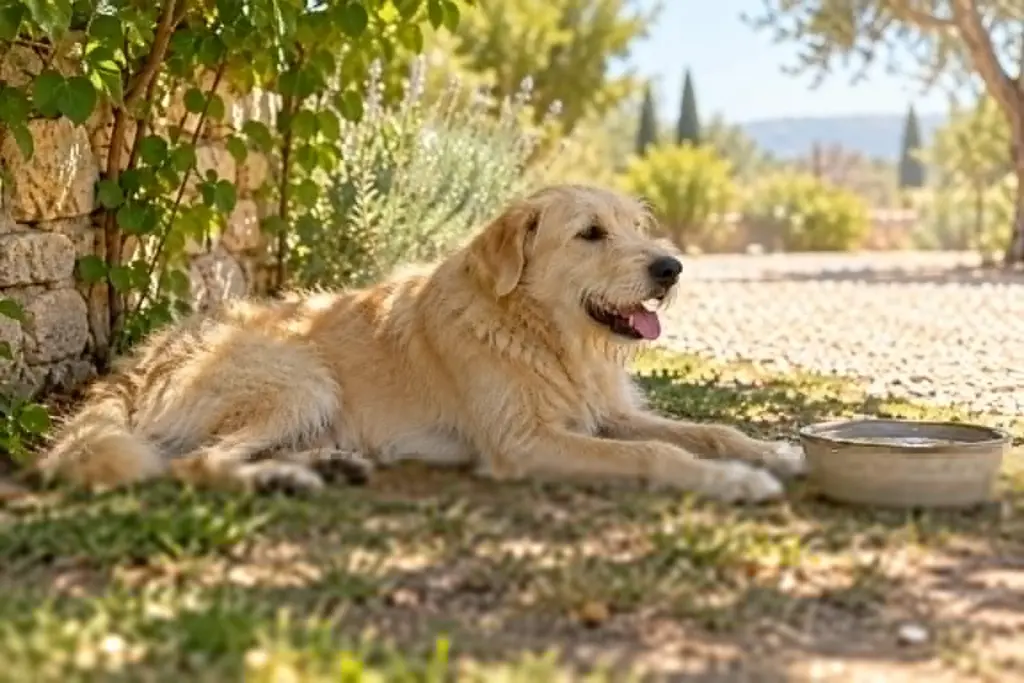
Dogs and cats have almost no sweat glands in the skin. They lose heat mainly by panting, and a little through the paw pads. In moving air that works reasonably well; in a warm, still space it barely works at all. Once panting can no longer keep up, body temperature can climb within minutes rather than hours.
So, before anything else: heatstroke is an emergency. If you suspect it, contact a veterinary practice or the out-of-hours service immediately, rather than waiting to see whether things settle on their own.
The parked car
A car standing in the sun heats up fast, including on days that do not feel particularly warm. A gap in the window changes little, shade moves as the day goes on, and the quick errand somehow turns into twenty minutes. Boots, trailers and transport crates in the sun carry the same risk. If the trip includes stops your animal cannot come into with you, it is safer to leave them at home. On longer drives, plan breaks in the shade and pack a bowl and a bottle of water; aim the ventilation so the air reaches the back seats too. Sun shades on the side windows help, a covered crate with no airflow does not.
And if you ever come across an animal in obvious distress in a locked car and no owner can be found, 112 is the general emergency number in Luxembourg.
The seven-second check
Asphalt, dark paving, sand and artificial grass store heat for hours and get considerably hotter than the air. Paw pads are tough, but they are still skin. Place the back of your hand flat on the ground for about seven seconds; if you cannot hold it there comfortably, it is too hot for paws. Walk early in the morning or late in the evening instead, and switch to grass or forest tracks.
The surface is one thing, effort is another. Running alongside a bike or endless games of fetch have no place on a hot afternoon. Limping, insistent licking of the paws, or pads that look darker, red or damaged are reasons to have the practice take a look.
Spotting heat stress and cooling on the way
The early signs are quiet and easy to miss:
- heavy panting that does not settle in the shade
- restlessness, then sluggishness; the animal seeks out cool floors
- thick, sticky drool, very red or unusually pale gums
- a dog that lags behind, lies down and does not want to move on
If an unsteady or uncoordinated gait, vomiting or diarrhoea, a glazed expression, collapse, seizures or visibly laboured breathing join the picture, call a practice or the on-call service at once.
Cats show very little of this; a cat breathing with an open mouth is never in an ordinary situation, whatever the weather. Rabbits, guinea pigs and birds cope with heat especially badly, and a hutch that stood in the shade at nine in the morning can be in full sun by one.
Cooling is what you can do while you travel; it does not replace an examination. Call ahead so the team knows you are coming, then on the way:
- get out of the sun and keep air moving, with a fan or open windows, in the car with the air conditioning
- wet the coat with cool water, not ice-cold, and repeat; the neck, chest, belly and inner thighs are good areas. Ice-cold water or an ice bath can have the opposite effect
- do not lay a soaked towel over the animal and leave it there, heat builds up underneath; re-wet regularly instead
- offer small amounts of cool water if the animal is alert and drinks on its own; never pour water into the mouth of a drowsy or collapsed animal
Flat-faced breeds, whose airways make cooling by panting harder, run into trouble first, along with very young, older and overweight animals, thick or dark coats, and animals with known heart or airway conditions. The first hot days of the year are often the trickiest, because nobody is used to the warmth yet.
Before summer settles in
Put water in several places and keep a shaded retreat indoors as well as outdoors. Cats with outdoor access should always be able to get back to somewhere cool.
Finally, save the on-call information before you need it: the small-animal out-of-hours service runs from 08:00 to 08:00 the following morning, and the lists are published by the Collège Vétérinaire and the veterinary professional bodies.
Frequently asked questions
Is it enough to park in the shade and leave the window open a crack?
No. Shade moves through the day, a window gap provides almost no air exchange, and the interior keeps heating up. Plan the trip so that your animal does not have to wait in the car.
How do I tell whether the ground is too hot for paws?
Place the back of your hand flat on the asphalt for about seven seconds. If you cannot hold it there comfortably, it is too hot for paws. Switch to grass, forest tracks, or to the early and late hours of the day.
What should I do if I suspect heatstroke?
Contact a practice or the out-of-hours service immediately and say you are on your way. On the way: get out of the sun, keep air moving, and wet the coat with cool, not ice-cold, water. The small-animal out-of-hours service runs from 08:00 to 08:00 the next morning; 112 is the general emergency number.
Do cats get heat problems too?
Yes, they simply show it far less. A cat breathing with an open mouth is a reason to contact a practice or the on-call service straight away.
Who can I reach at night or at the weekend?
The on-call practices run a 24-hour service that starts at 08:00 and ends at 08:00 the next morning. To reach the vet on duty you can call 112 or Post Infotel on 26 77 12 34, and the on-call list is published by the Collège Vétérinaire and on amvl.lu under GARDES. Our own emergency page lists the ones on duty right now with their numbers. Call before you set off: the vet on duty may not be at the practice and has to get there too.