

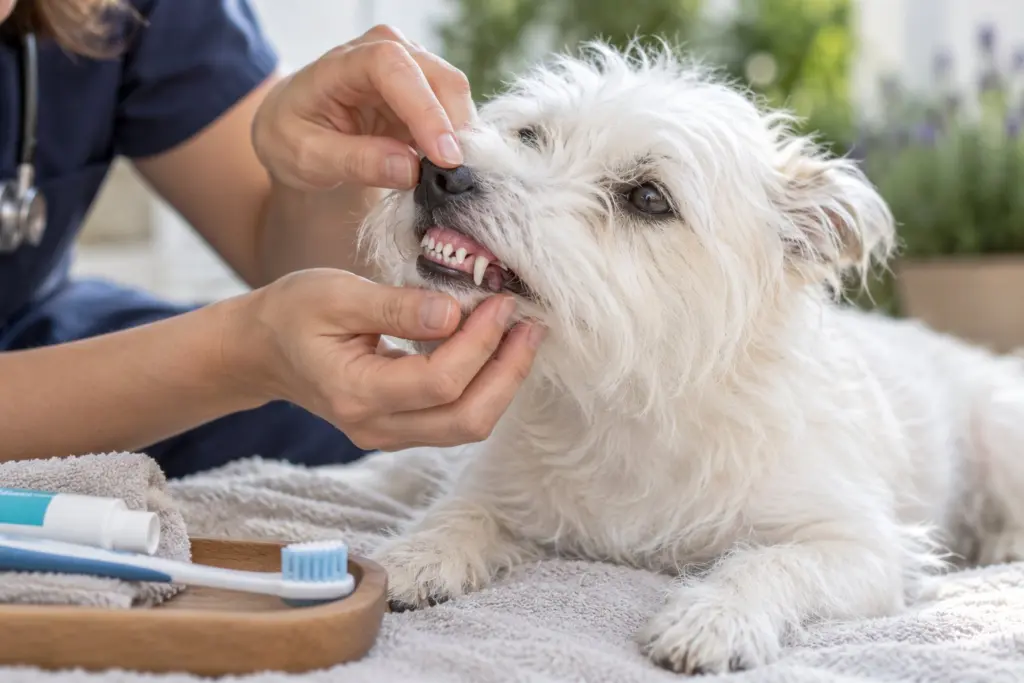
Dental disease is one of the most common findings in adult dogs and cats, and one of the slowest to be noticed. Most of a tooth sits below the gumline, and what goes wrong down there goes wrong over years. Animals also carry on remarkably well: a cat with a sore mouth usually keeps eating, and a dog with a bad tooth still greets you at the door.
With no dramatic moment to force the issue, early signs get filed under ageing. He has slowed down, she was always fussy. Sentences like that often describe a mouth that has hurt for a long time.
When it cannot wait for the next appointment
Most dental trouble can wait for a normal appointment. A few situations cannot.
Contact a practice or the out-of-hours service straight away if your animal stops eating and drinking altogether or suddenly refuses to swallow, and likewise for:
- swelling of the face, under an eye or along the jaw, that appeared within a day or two
- bleeding from the mouth that does not stop
- a jaw injury after a fall or an accident
- a broken tooth with a pink or dark centre showing
- choking, laboured breathing or frantic pawing at the mouth after chewing on something
- any suspicion that something toxic has been chewed or swallowed
In Luxembourg the small-animal out-of-hours service runs from 08:00 to 08:00 the next morning; the on-call lists are published by the Collège Vétérinaire, by the LAK under “GARDE” and by the AMVL. The general emergency number is 112.
Watching and brushing at home
For everything else, you are not expected to make a diagnosis; noticing that something has changed is enough. In daily life, keep an eye out for:
- breath that has changed or stays unpleasant
- chewing on one side, dropping food, hesitating over hard food despite obvious hunger
- more drooling than usual, sometimes tinged with blood
- a red rim along the gums, brownish deposits on the back teeth
- in cats, less grooming and a coat going unkempt
None of this tells you what is wrong; it tells you the mouth needs looking at.
Prevention, though, is mostly yours to do, and the toothbrush does most of the work. Brushing acts on the soft film that re-forms every day, before it hardens. Once deposits have set onto the tooth, no amount of home brushing shifts them, and that job passes to the practice. The habit matters more than the technique: a minute every day beats ten minutes on a Sunday. Start by touching the muzzle and lifting the lip for a few seconds, pair it with something pleasant and stop while things are still going well. After a few days add a finger brush or a soft brush, working only along the outer surfaces at first; the inner ones matter far less in everyday life. Use only products made for animals, and ask your practice what suits your own dog or cat.
Chews and additives exist in great variety, and what they achieve varies just as widely. Here too it is worth asking the practice, not least because very hard objects are a frequent cause of broken teeth. Home care supports veterinary care; it does not replace it.
What happens at the practice
n
In an awake animal, the outer surfaces of the teeth and gums can be checked. That is enough to spot something obvious and decide whether more is needed, but not enough for a full picture. The thorough assessment happens under general anaesthesia, because probing each tooth, cleaning below the gumline and taking dental X-rays are simply not possible in a conscious patient. Beforehand the practice checks general health, often with a blood test, and talks the benefits and risks through with you.
During the procedure every tooth is assessed on its own and the findings go onto a dental chart; X-rays show what stays hidden below the gumline. Deposits are removed with an ultrasonic scaler and the surfaces polished afterwards. Some teeth turn out not to be worth saving, which is why practices ask you to stay reachable by phone: that decision is often made while your animal is asleep. You usually collect your animal the same day, along with the recorded findings and a plan for what comes next.
Paperwork worth checking while you are there
Practices in Luxembourg work in several languages; when you book, just say whether you prefer Luxembourgish, German, French, Portuguese or English. Bring the EU pet passport: it is issued by a vet and records the chip number and the rabies vaccination, which is compulsory in Luxembourg from twelve weeks of age. If you regularly cross the border in the Greater Region, keeping it current saves trouble anyway.
Frequently asked questions
How often should I brush my dog's or cat's teeth?
Daily is what counts, because the soft film re-forms every day. A short session every evening does more than a long one once a week. Your practice can show you the technique and suggest products suited to your animal.
My cat still eats normally. Can the mouth really be a problem?
Yes. Eating is a poor guide, because cats usually keep eating with a sore mouth. How they eat says more: chewing on one side, dropping food, or suddenly preferring soft food.
Why does a full dental assessment need general anaesthesia?
Because probing each tooth, cleaning below the gumline and taking dental X-rays cannot be done on an awake animal. Your vet can talk you through the checks beforehand and the risks in your animal's case.
Is bad breath simply normal in dogs and cats?
Persistently unpleasant breath is common but not normal, and it is often the first thing owners notice. It is worth raising at the next appointment rather than waiting for something more obvious.
Who can I reach at night or at the weekend?
The on-call practices run a 24-hour service that starts at 08:00 and ends at 08:00 the next morning. To reach the vet on duty you can call 112 or Post Infotel on 26 77 12 34, and the on-call list is published by the Collège Vétérinaire and on amvl.lu under GARDES. Our own emergency page lists the ones on duty right now with their numbers. Call before you set off: the vet on duty may not be at the practice and has to get there too.