

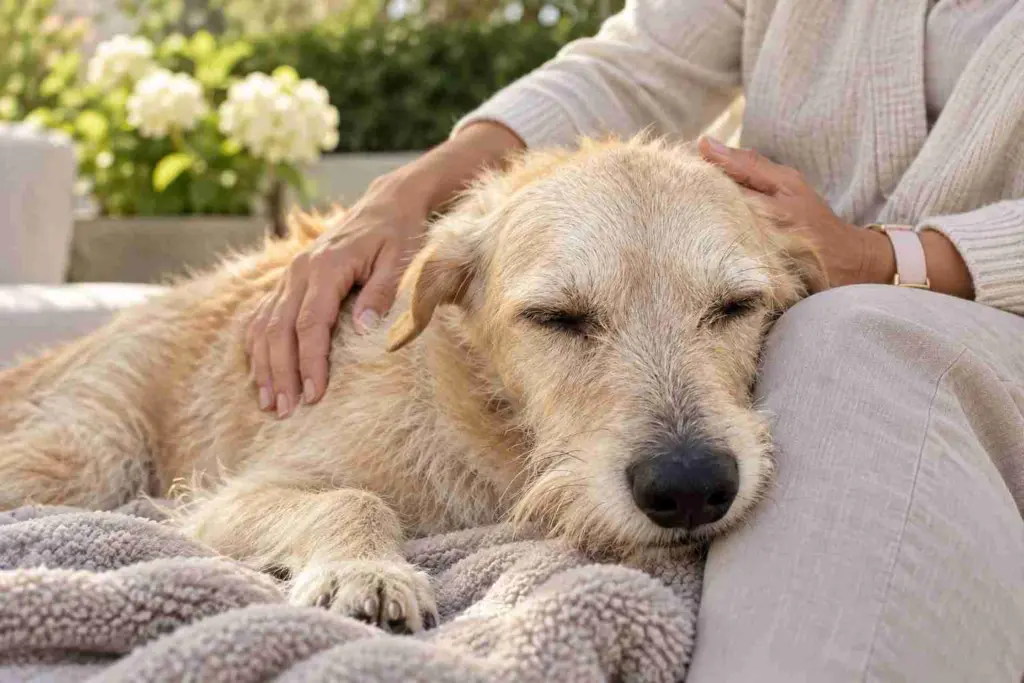
No single birthday turns a pet into a senior. Cats usually count as senior from about ten to twelve years, while dogs age by size: many large breeds show the first changes at six or seven, small dogs often not until nine or ten. Ageing is not an illness. It does make some illnesses more likely, and easier to miss, because they arrive slowly and look like nothing more than age.
The changes themselves look similar in most animals. Joints lose cushioning and muscle is lost faster than it is rebuilt. Hearing and sight fade gradually; the animal compensates long before you notice. Teeth and gums carry years of wear, and kidneys, heart, liver and thyroid work with less reserve. Sleep becomes lighter, and weight drifts in one direction or the other.
Signs that should not wait
Most of what you notice in an older animal can wait for the next appointment. A few things cannot.
Contact a practice or the out-of-hours service immediately if you see:
- laboured, noisy or open-mouthed breathing at rest, especially in a cat
- a male cat going to the litter tray again and again and passing little or no urine
- a dog with a tight, swollen belly, restless and retching up nothing
- collapse, a seizure, or sudden inability to stand
- anything swallowed that could be toxic, including household products and human medicines
- suspected overheating: heavy panting after heat or exertion, even if the animal is already in the shade
- a painful, closed, red or cloudy eye, or any injury to the eye
- heavy bleeding, a fall or a road accident, even if the animal seems fine
In Luxembourg the small-animal out-of-hours service runs from 08:00 to 08:00 the next morning. The on-call rota is published by the Collège Vétérinaire and by the veterinary professional bodies under “GARDE”. 112 remains the general emergency number.
Everyday signs worth mentioning
Other observations are not emergencies, but they are exactly what a vet wants to hear about:
- drinking noticeably more and urinating more often
- weight going down, or up, with no change in feeding
- bad breath, food dropping from the mouth, or chewing on one side only
- stiffness after resting, hesitation at stairs, a cat that no longer jumps to its usual spot
- a new lump under the skin, or an old one that changes
- coughing, or tiring on a walk that used to be easy
- straining to urinate, accidents indoors, blood in urine or stool
- much less grooming, or licking one spot insistently
- calling at night and disorientation
- vomiting or loose stools that keep returning over days
Note them down with dates, and film whatever is hard to describe: a limp, say, or an odd breathing rhythm. Thirty seconds of video often says more than a paragraph.
Notes like these are also why many practices move older patients to two visits a year: twelve months is a long stretch late in life. A visit usually means the same scales as last time, a full examination and often blood and urine samples; values from a healthy animal make a later change easier to place. Anything your animal already receives is reviewed rather than simply continued.
Small adjustments at home
Much of this costs very little. Runners or rugs on smooth floors often help most, because slipping can make an older animal move less. A step or a ramp to the sofa or the car boot spares the jump down. For cats: a litter tray with a low rim, ideally one per floor, several water points, and food and water where no stairs are in the way.
For dogs, shorter walks taken more often, with time to sniff, beat one long outing. Leave the furniture where it is if sight is fading; if it is hearing, approach from the front and speak first. Add a warm bed out of draughts and a regular look at the claws, because an animal that walks less wears them down less. Weigh monthly if you can, and note the figure.
Paperwork and the quality-of-life conversation
That leaves the question nobody likes to raise. Ageing well is mostly a series of small corrections made early. Keep a rough tally of good and bad days and bring it with you. Appetite, mobility, continence, sleep and interest in company can be weighed up with your vet over time, and none of the harder decisions has to be made alone or in a single appointment.
Frequently asked questions
When does a dog or cat count as senior?
There is no fixed date. Cats are generally counted as senior from about ten to twelve years; for dogs it depends on size, often six or seven for large breeds and considerably later for small ones. Your vet can say where your animal stands.
How often should an older animal be seen?
Many practices move older patients to two visits a year, because twelve months is a long stretch late in life. Blood and urine values taken while the animal is well serve as a baseline for later comparison.
My old cat is drinking much more than before. Is that just age?
Drinking and urinating more is one of the changes owners notice most often, and it is worth an appointment rather than a shrug. Several conditions of older cats can cause it, and your vet can assess it with simple tests.
Who can I reach at night or at the weekend?
The on-call practices run a 24-hour service that starts at 08:00 and ends at 08:00 the next morning. To reach the vet on duty you can call 112 or Post Infotel on 26 77 12 34, and the on-call list is published by the Collège Vétérinaire and on amvl.lu under GARDES. Our own emergency page lists the ones on duty right now with their numbers. Call before you set off: the vet on duty may not be at the practice and has to get there too.