

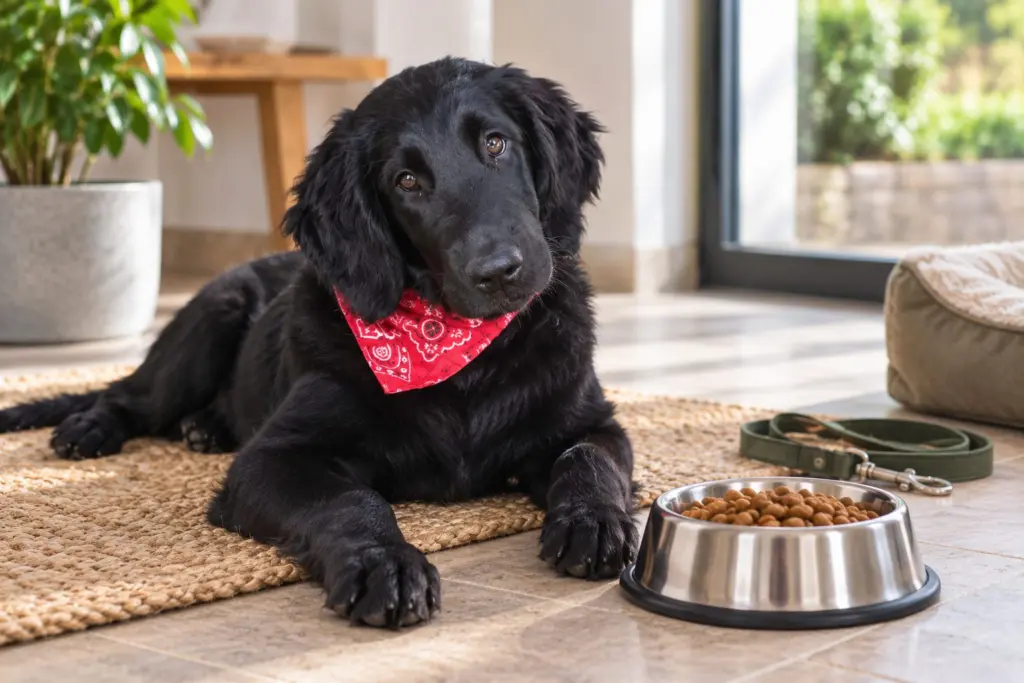
Whether your animal is too heavy is not settled by the scales alone, and certainly not by the impression that it always looked like this. What counts is what your hands find. Lay both palms flat on the ribcage and run them over it: the ribs should be there under a thin layer, without your having to press. Seen from above, a waist should show behind the ribs; from the side, the belly line should rise towards the back.
Why a few hundred grams weigh more than they sound
n
On an animal of a few kilos, half a kilo too much is already a noticeable share of its body weight. On a person that would be several clothing sizes. And that weight presses on joints that have to last years yet. It makes moving harder, so the animal moves less, and the weight goes up again. From one week to the next nobody sees it. You notice it in a photograph from two years ago, and by then the circle has been turning for a while. Breaking it early is markedly easier than undoing it later.
Where the calories actually come from
Almost never from the main meal. They come from what happens alongside it, and that is exactly what nobody counts:
- treats during training, on coming home, in front of the television
- leftovers from the plate, including the small ones
- chews meant as occupation and received as a meal
- the second bowl at somebody well-meaning, in the household or next door
- dry food standing out all day and emptied from boredom
Write down for a week everything your animal gets. Everything, the piece of cheese included. That list is the most useful thing you can bring to an appointment, and it surprises most owners more than the scales do.
What to change and what to leave alone
Measure the daily ration instead of estimating it, and take the treats out of that amount rather than adding them on top. If several people feed, the arrangement has to be clear, or everyone counts on somebody else’s portions. More exercise helps. It does not replace the amount in the bowl, though, because an animal eats faster than it can walk.
What you should not do is put a cat on a strict diet on your own initiative. Cats tolerate a sudden drop in food badly, and serious liver problems can follow. The pace therefore belongs at the practice, not in your kitchen. For dogs the same holds in a quieter form. Losing weight slowly lasts. Losing it fast comes back, usually with interest, because muscle goes with it that the animal would have needed for the next round.
When it is not a feeding question
Not every change in weight comes from the bowl. If your animal gains although the amount has not changed, or loses although you have changed nothing, that needs looking at. The same goes if the belly rounds out while the rest of the animal looks thinner, if drinking and urine output rise noticeably, or if an animal suddenly struggles for breath.
After neutering the energy requirement drops while the appetite does not. That is the most common moment at which a previously lean animal starts gaining, and the best moment to set the amounts again.
The appointment that is worth it
A weight appointment is unspectacular and usually short: weigh, assess body condition, go through your list, agree an amount and agree a point at which you both look again. Weighing every few weeks on the same scales and writing the number down shows a direction, instead of a remembered impression. The same scales matter more here than the exact number.
Frequently asked questions
How do I tell whether my animal is too heavy?
With your hands, not your eyes. Lay both palms flat on the ribcage: the ribs should be there under a thin layer, without your having to press. From above, a waist should show behind the ribs. If you are unsure, have the body condition assessed at the practice; it takes a few minutes.
Can I simply feed my cat less?
Not on your own initiative and not abruptly. Cats tolerate a sudden, large cut in food badly, and serious liver problems can follow. The practice sets the pace.
Is more exercise enough?
It helps, but it does not replace the amount in the bowl: an animal eats faster than it can walk. The two together, with a measured ration, is what reliably works.
My animal has gained weight although I changed nothing. Why?
That needs looking at rather than guessing at the bowl. A gain without a change in amount can have other causes, and the same goes for a loss you cannot explain. Noticeably more drinking and urinating is also a reason for an appointment.
How often should I weigh?
Every few weeks is enough, always on the same scales, and write the number down. That shows a direction rather than an impression. The same scales matter more than the exact number.
Who can I reach at night or at the weekend?
The on-call practices run a 24-hour service that starts at 08:00 and ends at 08:00 the next morning. To reach the vet on duty you can call 112 or Post Infotel on 26 77 12 34, and the on-call list is published by the Collège Vétérinaire and on amvl.lu under GARDES. Our own emergency page lists the ones on duty right now with their numbers. Call before you set off: the vet on duty may not be at the practice and has to get there too.